📅 26 years ago #Yesterday - sorry been busy 💖🤣...
⚠ Fault cuts STS-83 mission short
🛰 Microgravity Science Laboratory-1 (MSL-1) launch
🚀 Space Shuttle Columbia launch - mission STS-83
🏆 Shortest shuttle mission due to fuel cell issue
🌐 64 orbits completed, 1.5 million miles travelled
On Sunday, 6 April 1997, Space Shuttle Columbia launched from Kennedy Space Center on the Microgravity Science Laboratory-1 (MSL-1) mission planned to be a 15 day mission. This was the first of two flights devoted to microgravity research. The MSL-1 payload consisted of a variety of experiments to be conducted in the Spacelab module of the shuttle.
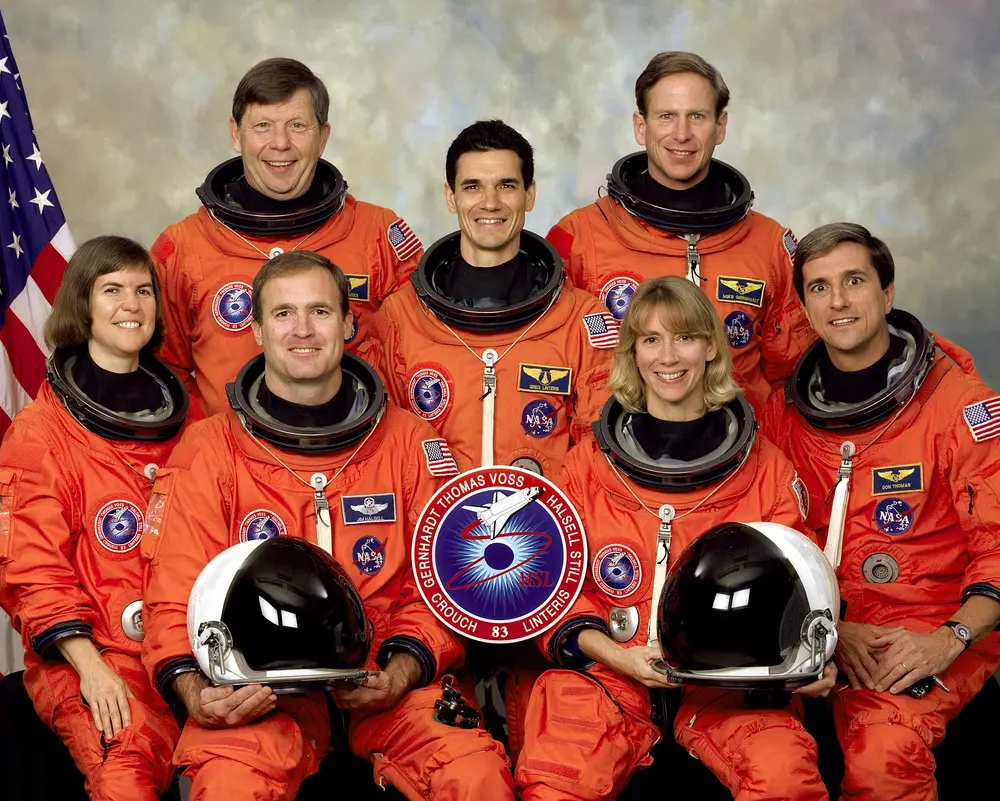
Crew:
👨🚀 James Halsell Jr., Commander
👨🚀 Susan Still, Pilot
👩🚀 Janice Voss, Payload Commander
👨🚀 Donald Thomas, Mission Specialist
👨🚀 Michael Gernhardt, Mission Specialist
👨🚀 Roger Crouch, Payload Specialist
👨🚀 Gregory Linteris, Payload Specialist
However, a fuel cell problem caused the mission to be cut short. One of three fuel cells, used to generate power for the craft, were showing a loss of control in the mixing of oxygen and hydrogen - which could result in an explosion, as was experienced during the Apollo 13 mission. Despite close monitoring and troubleshooting, the anomaly could not be resolved and the decision was taken to terminate the mission for safety.
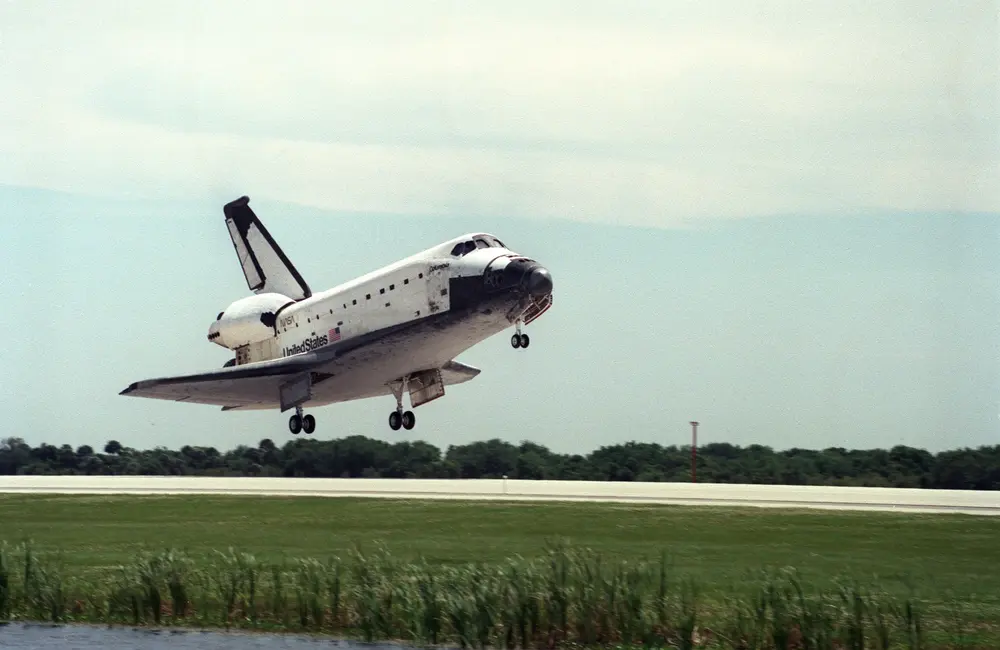
Only 3 days into the mission, STS-83 was terminated and the shuttle returned to Earth, landing at the Kennedy Space Center on April 8, 1997.
The two planned spacewalks had to be cancelled, and the mission was the shortest shuttle flight at that time - lasting only 3 days and 23 hours, completing 64 orbits and traveling 1.5 million miles.
Images, Credit: NASA
1. Space Shuttle Columbia landing at Kennedy Space Center
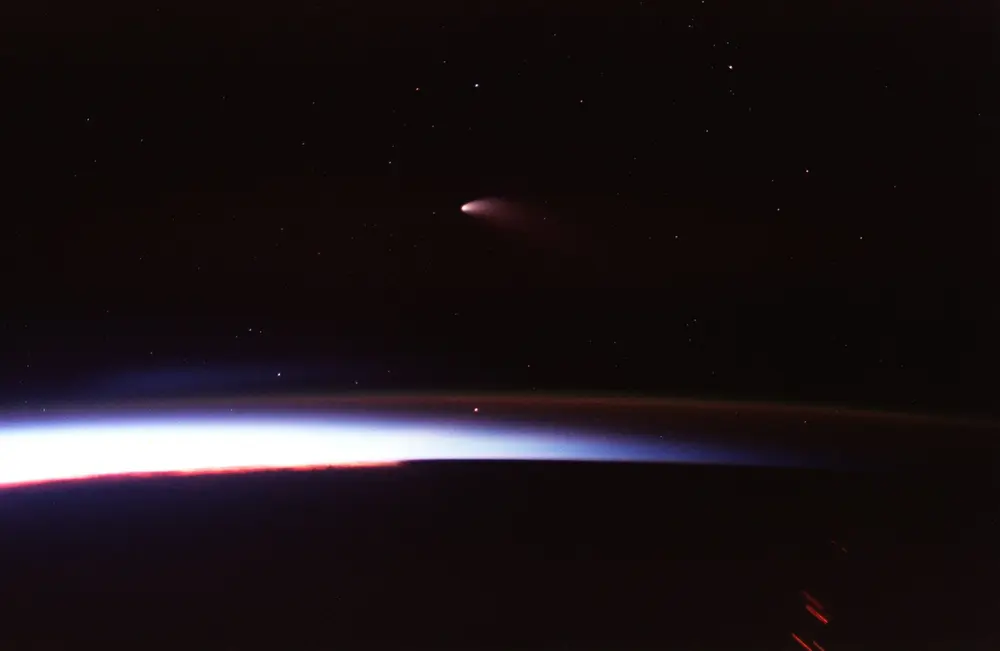
2. Comet Hale-Bopp observed by the STS-83 crew
3. Crew L-R: Voss, Crouch, Halsell, Linteris, Still, Gernhardt, Thomas